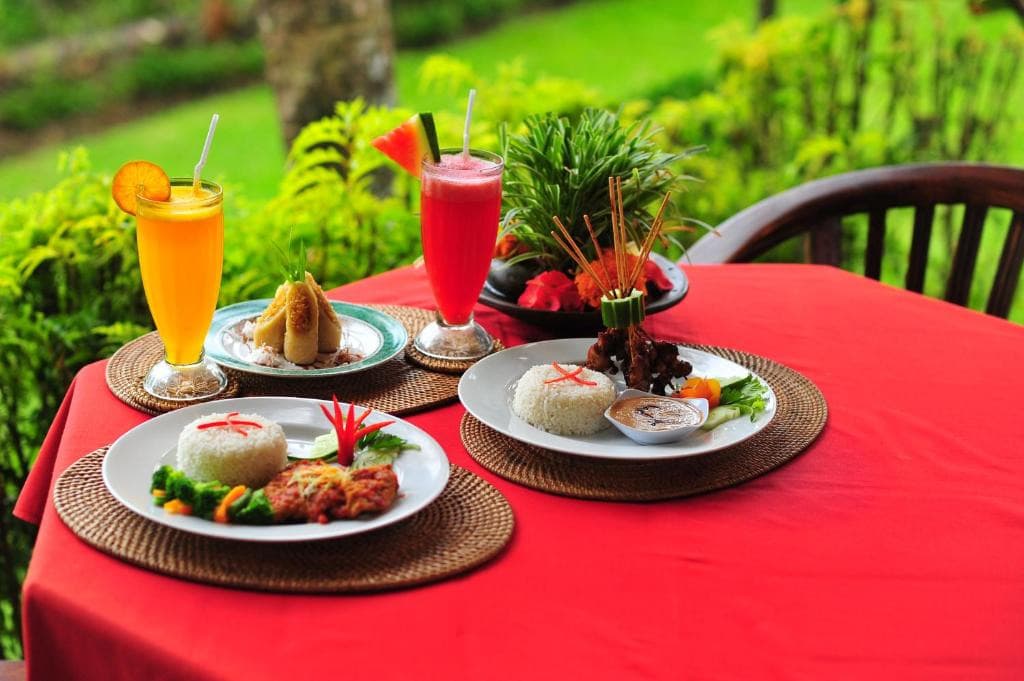
Balinese Cuisine: Culinary Specialties and Drinks You Must Try!
Want to take your taste buds on a journey? Discover the best culinary specialties to eat in Bali! The good news? There's something for everyone, whether you're vegetarian, a lover of spicy flavors
Want to take your taste buds on a journey? Discover the best culinary specialties to eat in Bali! The good news? There's something for everyone, whether you're vegetarian, a lover of spicy flavors or not...

|
Eating in Bali: The Essentials Balinese cuisine is recognized for its quality and diversity – featuring vegetarian dishes, fish-based specialties, and meat preparations. Most restaurants and food stalls respect hygiene standards, but as a precautionary measure, it's advisable to avoid raw foods and beverages served with ice – tap water is not safe to drink in Bali. |
What Are the Typical Dishes of Bali and Balinese Meals?
Nasi Goreng, the Essential Fried Rice

It's one of the most popular dishes in Bali and Indonésie. Translated as "fried rice," this dish was originally created to minimize food waste by reusing leftovers from the previous meal. In any case, it has become an unmissable Indonésian dish.
Its preparation can vary by region or from one warung to another, but generally it consists of fried rice mixed with vegetables and a fried egg placed on top (eggs can also be cooked and mixed with the rest).
For the sauce, it's typically made with kecap manis (soy sauce, chili paste, and shrimp paste). It's often accompanied by cucumber slices and shrimp chips.
Among the different versions of nasi goreng, you'll find:
● Nasi goreng ayam: with chicken,
● Nasi goreng sapi: with beef,
● Nasi goreng udang: with shrimp,
● Nasi goreng seafood: with mixed seafood…
Discover our recipe for authentic Indonésian nasi goreng.
Mie Goreng, Fried Noodles
Mie goreng contains exactly the same ingredients as nasi goreng, except the rice is replaced with fried noodles.
Gado Gado, the Ultimate Vegetarian Dish

Gado gado is a vegetarian culinary specialty. Meaning "mixture," it consists of a blend of crispy steamed vegetables (typically green beans, cabbage, bean sprouts, potatoes...) with hard-boiled eggs, tofu, and tempeh (see end of article). It's served with a sauce made from peanuts, chili, garlic, tamarind, and palm sugar.
Betutu, a Dish with Bold Flavors
Betutu refers to a blend of Indonésian spices composed of shallots, garlic, ginger, turmeric, candlenut, peanuts, shrimp paste, and chili. These spices are ground into a paste using a mortar to accompany meat.
Usually, betutu coats a duck thigh steamed in coconut husk or banana leaves. In this case, it's called bebek betutu. There's also a chicken version: bumbu betutu. One thing is certain, this typical Balinese dish will delight lovers of bold and spicy flavors.
Babi Kecap, Caramelized Pork
Unlike the rest of Indonésie, which is Muslim, Bali is Hindu. This is why you'll find Balinese pork dishes. One of them is babi kecap. It's simply a pork fillet generously coated with kecap, Indonésian soy sauce. With its caramelized flavors, this dish appeals to lovers of sweet and savory combinations.
Babi Guling, Suckling Pig for Festive Meals
This is a typically Balinese dish and perhaps the favorite dish of Balinese people. Served only as a festive meal for special occasions such as ceremonies, babi guling is a suckling pig stuffed with spices (garlic, coriander, black pepper, chili...) and roasted for several hours on a spit.
Its specialty? The crispy skin of the pig that provides a satisfying crunch. It's served with skewers, sausage and offal, lawar (see below) and of course, rice!
Lawar, a Colorful Dish
Lawar is a typical Balinese dish, full of color and incredibly complete. It consists of a blend of vegetables, freshly grated coconut, ground meat, fried shallots, and herbs and spices native to Bali. It can be prepared with pork, chicken, or sometimes duck.
Note that there are two types of lawar: Lawar Putih (traditional white lawar) and Lawar Barak / Merah (red lawar), which gets its red color from the inclusion of pork or chicken blood.
Sate, Meat Skewers

If you love barbecue and grilled meats, don't miss sate, an Indonésian street food specialty. These are marinated pieces of meat threaded onto skewers and then grilled over charcoal before being served with sauce.
For your information, sate refers to the sauce that accompanies the meat. It's prepared from peanut or sesame oil, coconut milk, turmeric, ginger, roasted peanuts, coriander, and soy sauce. As for the meat used, it's generally chicken, but you'll also find versions with beef, pork, lamb, and sometimes fish.
Note that Bali has its own version of sate: sate lilit. The difference? Instead of meat chunks, you use ground meat mixed with spices and coconut. Everything is wrapped around bamboo sticks, sugar cane, and lemongrass before being charcoal-grilled.
Tempeh, a Fermented Soy Cake
Tempeh is THE specialty that will delight vegetarians traveling in Indonésie, but will also surprise non-vegetarians! It consists of fried cakes made from fermented soy beans. Said like that, it might sound strange, but trust us, it's delicious.
Its slightly crispy texture gives the impression of eating peanuts. Ultra-rich in protein, it's the ideal alternative to replace meat in most Balinese dishes.
Grilled Fish with Sambal Matah
As an island, Bali offers visitors the chance to enjoy fresh fish and seafood. Whatever type of fish you prefer, we recommend choosing a charcoal-grilled fish with Sambal Matah.
Sambal Matah is a spicy Balinese sauce made from chili, shallots, garlic, lime, lemongrass, and coconut oil.

|
The Foundations of Balinese Cuisine ● Banana leaves and rice (fried, grilled, or boiled) are staple ingredients in Balinese cuisine. ● Spices and condiments – such as cumin, ginger, turmeric, etc. – also play an important role and flavor numerous recipes. ● Sambal sauces also accompany many Balinese meals. The most common is sambal matah. |
What Do You Drink in Bali?
Bintang Beer
Bintang is a beer produced by the Multi Bintang group (the Indonésian subsidiary of Heineken). It's recognizable by its red star (bintang meaning star). Historically? This alcoholic beverage is a product of Dutch colonization…
Bintang is appreciated for its hop and malt flavor. It contains 4.7% alcohol in a 33 cl bottle – while Bintang radlers contain only 2%. There are flavor variations, including lemon and raspberry. It's an inexpensive beer (around €1.50 to €2 per bottle).
Arak
Arak is to Balinese what tequila is to Mexicans! This strong alcohol – containing between 35 and 50% alcohol! – is mainly consumed during religious ceremonies and rituals. There are three types of arak: made from palm sap, coconut, or rice (the least common). Its distillation is still done artisanally – particularly in Bali and Lombok.
Kopi Luwak
Kopi luwak is THE drink you absolutely must taste when visiting Bali. Its particularity? It's a coffee whose beans come from… civet droppings! This wild animal has almost no digestion: the coffee cherries remain intact in its digestive tract….
This unusual harvest has a historical explanation: during Dutch colonization (in the 18th century), coffee plantations and production were forbidden to Indonésians. Eager to drink coffee nonetheless, they discovered that coffee fruits ingested by civets were rejected without alteration.
As a result? The indigenous people decided to consume them. Today, luwak coffee is one of the most expensive in the world… Expect to pay around €92 for a 250g package!
What is a Warung in Bali?

In Bali, you'll often see the term "Warung." It's usually a family operation taking the form of a shop or small eatery. Warungs can combine retail and street food stands. They're often the best places to taste authentic Balinese dishes at unbeatable prices!
Would you like to discover all the local specialties during a trip to Bali, but you're hesitant or unsure where to go? How about being accompanied by a deutschsprachig local expat to benefit from their insider tips? With our " Like a Local Expat: Street Food" option, you can be guided for a half-day, a full day, or an evening to try the best street food Bali has to offer!
Is it Safe to Eat at Restaurants in Bali?
Hygiene is generally good in Bali restaurants, however, it's wise to be cautious to avoid contracting Bali belly – the Balinese traveler's curse! Like any gastroenteritis, it causes diarrhea caused (in 80% of cases) by bacteria such as salmonella or E. coli, resulting from poor hygiene or bad water quality. Therefore, it's recommended to:
● avoid fresh fruit juices,
● request drinks without ice as a precaution (even though these are usually purchased commercially by restaurant owners).
● avoid homemade ice cream,
● drink only sealed bottled water, opened in front of you, or that you open yourself (always remember that tap water is not safe to drink!),
● eat well-cooked foods,
● avoid ordering salad (potentially rinsed under tap water),
● wash your hands (with a disinfectant or hand sanitizer) before touching food.
Most restaurants and warungs are strict and impeccable about hygiene standards. But, as everywhere else, there can be less scrupulous establishments.
To spot them? Trust your gut feeling and avoid questionable joints (or those lacking customers). Don't hesitate to check reviews on dedicated sites or apps.
Regarding warungs, choose those serving dishes in disposable packaging rather than on plates or bowls (potentially washed with tap water).
Frequently Asked Questions
Is the Food Good in Bali?
Bali is an ideal destination for food lovers! Vegetarian dishes, Balinese specialties with fish, seafood, or pork, in warungs (street food) or gourmet restaurants: the destination offers countless options, accessible to all budgets.
How Do You Eat in Bali?
To taste authentic Balinese specialties, stop at a warung! Whether a small shop or a modest stall, these family-run establishments serve traditional fresh dishes (and at low prices). The quality of their food is reputed to be much better than tourist restaurants.
What's the Budget for Eating in Bali?
Food is inexpensive in Bali. While prices vary depending on the type of establishment (and their standing), the average price per person for a meal is between €2 and €4 at a warung, around €7 at a standard restaurant, and about €10 at a more upscale establishment. A local beer costs around €2.
Florine Dergelet